Early Signs of Trigger Finger You Shouldn’t Ignore
posted: Dec. 02, 2025.
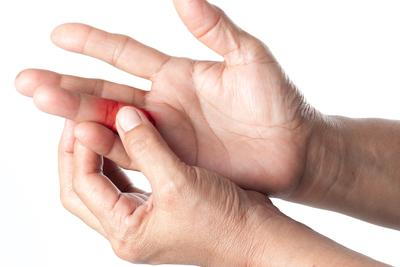
Trigger finger, also known as stenosing tenosynovitis, is a condition that affects the tendons in your fingers or thumb, making them stiff, painful, or even causing them to lock in a bent position. At Loredo Hand Care Institute in Grapevine, TX, Dr. Pedro J. Loredo, M.D., specializes in diagnosing and treating hand and finger conditions for patients throughout the Dallas area. Recognizing the early signs of trigger finger can help you seek timely care and prevent further discomfort or functional limitations.
Persistent Finger Stiffness
One of the first signs of trigger finger is stiffness, particularly in the morning or after periods of inactivity. You may notice that your finger feels “tight” or difficult to straighten fully. This stiffness can progress gradually, and ignoring it may lead to increased discomfort or locking.
Clicking or Popping Sensation
A hallmark symptom of trigger finger is a clicking, popping, or catching sensation when bending or straightening the affected finger. This occurs when the tendon struggles to glide smoothly through its sheath. Initially, the sensation may be intermittent, but over time it can become more frequent and pronounced.
Pain at the Base of the Finger or Thumb
Discomfort or tenderness at the base of the finger or thumb, where the tendon passes through the pulley, is another early indicator. Pain may worsen with gripping, grasping, or repetitive hand movements, and it may radiate slightly up or down the finger.
Finger Locking or Catching
In more advanced cases, the finger may lock in a bent position and require manual assistance at our Grapevine, TX, practice to straighten. Early recognition of the locking phase is crucial because delayed treatment can make non-surgical interventions less effective.
Swelling or a Small Bump
Some patients notice a small nodule or swelling at the base of the affected finger. This bump represents inflammation of the tendon sheath and can contribute to the catching or locking sensation.
Seeking Early Treatment
Early evaluation by a hand specialist like Dr. Loredo can help prevent trigger finger symptoms from getting worse. Treatments may include splinting, anti-inflammatory medications, corticosteroid injections, or, in certain cases, minimally invasive surgical procedures to release the tendon. Early intervention often results in faster recovery and less invasive treatment.
If you’re experiencing stiffness, clicking, or pain in your fingers, don’t wait until your finger locks completely. Contact Loredo Hand Care Institute in Grapevine, TX, serving the greater Dallas area, to schedule an evaluation and protect your hand function before symptoms progress. Call (972) 939-4974.